
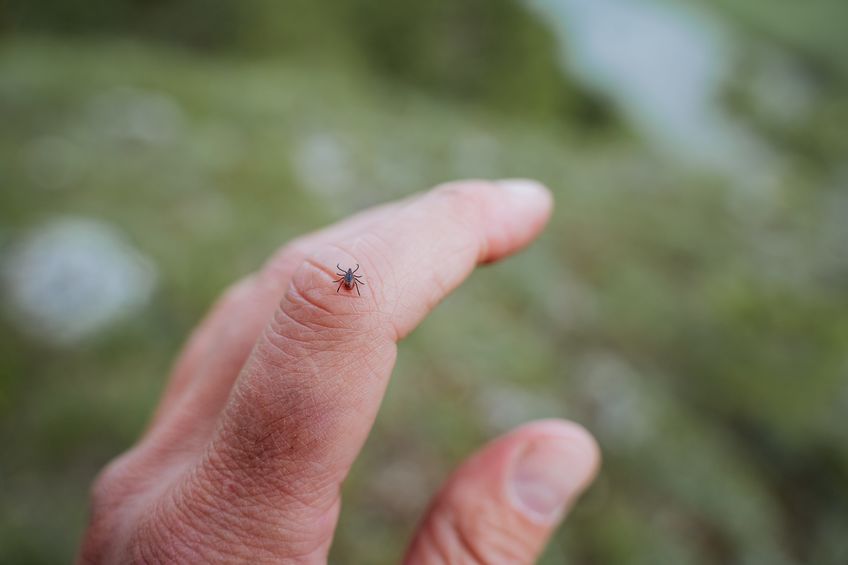
Ticks are already hard to notice, but their tiny size makes them even harder to find. Depending on the species and life stage, a tick can be small enough to blend in with freckles, dirt, or even a tiny scab.
That can be a problem because the longer an attached tick goes unnoticed, the longer it has an opportunity to feed. Knowing just how small ticks can be and where to look for them can make your routine tick checks much more effective.
Tick Size Changes Throughout the Life Cycle
Ticks go through several stages as they develop, including larva, nymph, and adult. Each stage looks a little different in size and appearance. You can learn more about these stages in our guide to the tick life cycle.
Larvae are extremely small, while nymphs are only slightly larger. According to the CDC, nymphal blacklegged ticks are about the size of a poppy seed. Adult blacklegged ticks are easier to see but can still be only about the size of a sesame seed when they have not fed.
At those sizes, it is easy to understand how a tick could attach without immediately getting your attention.
Nymphs Can Be Especially Difficult to Spot
Nymphs deserve extra attention because their size makes them particularly easy to miss. The CDC notes that many Lyme disease cases result from bites by nymphal blacklegged ticks, in part because these tiny ticks can remain attached without being noticed.
They may look like a speck of dirt at first glance, especially when attached around the hairline or other areas that are difficult to inspect. Taking a closer look rather than relying on a quick visual check can help you catch something you otherwise might overlook.
Engorged Ticks Can Look Very Different
Tick size can also change dramatically after feeding. An attached tick takes in blood over time and becomes engorged, causing its body to expand. That means the tick you find may look very different from the pictures of unfed ticks you have seen online.
Size alone should not be used to decide whether something on your skin or pet is a tick. If you are unsure, take a closer look and consider the shape, legs, and whether the object appears attached to the skin.
Check the Places Where Small Ticks Can Hide
Because ticks can be so tiny, pay extra attention to places where they are easily overlooked. This includes behind the ears, around the hairline, under the arms, behind the knees, around the waistband, and between the toes. Pets should also be checked around the ears, collar area, legs, paws, and other spots where fur can make small ticks difficult to see.
Good lighting can also make a difference. A magnifying glass or similar tool can help when you are trying to determine whether a tiny speck is actually a tick.
Be Prepared When You Find One
Finding a tiny attached tick is only the first step. Proper removal is just as important. The Original Tick Key™ is designed to remove ticks of various sizes from both people and pets without squeezing them. TickKey International, Inc. also offers the TickSee Kit, which includes a magnifying lens and hands-free light to make spotting and removing hard-to-see ticks easier. Explore our tick removal and prevention products, or call us at (203)300-5078 for more information.
Recent Comments