
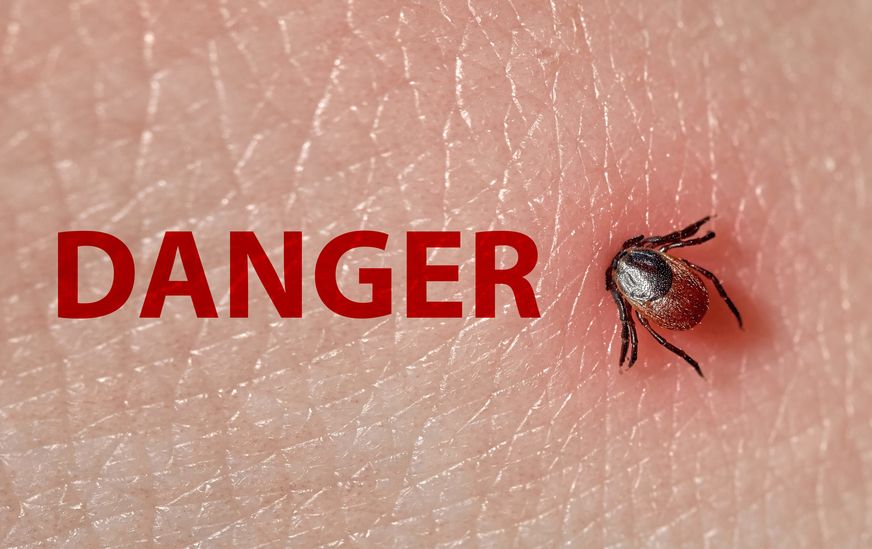
Most conversations about ticks focus on Lyme disease and other tick-borne infections, but ticks can cause problems in another, much less common way. Tick paralysis is a rare neurological condition caused by toxins released in the saliva of certain ticks while they feed.
Unlike Lyme disease or Rocky Mountain spotted fever, tick paralysis is not an infection. However, it can become serious quickly if the tick remains attached. Knowing the warning signs and checking carefully for an attached tick can make an important difference.
What Causes Tick Paralysis?
According to the American Lyme Disease Foundation, more than 40 tick species worldwide can cause tick paralysis, including several species found in North America. Human cases are rare and are reported most often in children under age 10. As an engorged female tick feeds, a neurotoxin produced in its salivary glands can interfere with the nervous system and gradually affect muscle control.
Symptoms typically do not appear immediately after a tick attaches. The American Lyme Disease Foundation notes that symptoms generally begin about five to seven days after attachment, although timing can vary depending on the tick species. That delay means the tick may have gone unnoticed for several days.
Because ticks can be extremely small and attach in difficult-to-see places, carefully checking the entire body is important. The scalp and hairline deserve particular attention, especially in children. Our guide to why tick size can make detection difficult explains just how easy smaller ticks can be to overlook.
Warning Signs of Tick Paralysis
Tick paralysis generally causes weakness that begins in the lower body and moves upward. The CDC describes it as an acute ascending flaccid paralysis, meaning muscles become weak and lose normal tone as symptoms progress. Early symptoms can include fatigue, numbness in the legs, and muscle pain before weakness progresses upward.
Warning signs may include:
- Unsteadiness or difficulty walking
- Weakness in the legs that progresses upward
- Loss of coordination
- Weakness in the arms
- Facial weakness
- Slurred speech
- Difficulty swallowing
- Shallow or irregular breathing
Symptoms involving breathing or swallowing require immediate emergency medical attention. Rapidly progressing muscle weakness should also be evaluated right away, even if you have not noticed a tick.
Finding and Removing the Tick Is Critical
One unusual feature of tick paralysis is that removing the tick can lead to significant improvement because the condition is caused by a toxin released while the tick is feeding rather than by an infection that continues after the tick is gone. Symptoms usually diminish rapidly after the responsible tick is removed. However, because the condition can progress to serious complications such as respiratory failure, medical evaluation is still important rather than simply waiting for symptoms to resolve.
If a tick is found attached, remove it promptly. The CDC recommends removing attached ticks as soon as possible and avoiding methods such as petroleum jelly, nail polish, or heat.
Make Thorough Tick Checks Part of Your Routine
Tick paralysis is rare, but it is another reminder that finding attached ticks early matters. After spending time in wooded, grassy, or brushy areas, check yourself, children, and pets carefully. Pay particular attention to the scalp, behind the ears, around the hairline, and other areas where a small tick could remain hidden.
If you do find one attached, the Original Tick Key™ provides a simple way to safely remove ticks from both people and pets. TickKey International, Inc. also offers the TickSee Kit, which includes a magnifying lens and hands-free light that can make hard-to-see ticks easier to locate. Explore our tick safety products or find a retailer near you to stay prepared for your next tick encounter.
Recent Comments